 Engineering Education
Magazine
Engineering Education
MagazineWhat Is SETI@home and How Does It Work?
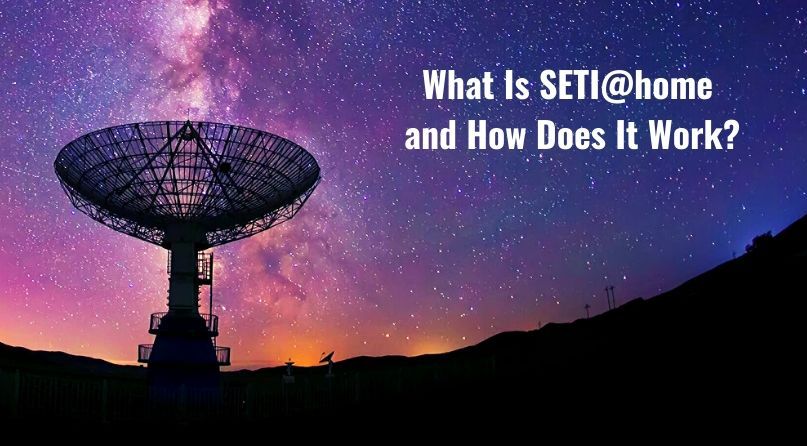
SETI@home (Search for Extra-Terrestrial Intelligence at Home) is a scientific non-profit voluntary computing project on the BOINC platform, created by the SETI research center at the University of California at Berkeley, using free computing resources on volunteer computers for the analysis of radio signals received by the SETI project. The project is supported by the University of California, Berkeley Space Science Laboratory and is part of SETI’s worldwide initiatives.
SETI@home was first introduced to the general public on May 17, 1999. At that time, it took third place among research conducted at that time using distributed computing via the Internet, after the Mersenne primer search project, launched in 1996 and supported by distributed.net in 1997. Along with MilkyWay@home and Einstein@home, this is the third major project of this type, exploring the phenomena of interstellar space as its main goal.
About the project
One approach to the search for extraterrestrial civilizations, SETI Radio Searches, uses radio telescopes to search for narrow-band radio signals from space. Supposedly, an extraterrestrial civilization will use radio communications (terrestrial radio stations can be caught from the nearest star systems to a good receiver). If the radio signal contains periodically repeating elements, it will be easy to detect them by calculating the Fourier transform for recording from the radio receiver. These repeating signals are supposed to be artificial in nature and, accordingly, their detection will indirectly confirm the presence of extraterrestrial technology. The signals received by the radio telescope mainly consist of noise produced by celestial objects, radio electronics, satellites, television towers and radars. Modern TAC projects (Search for Extraterrestrial Intelligence or SETI) in the radio range use digital technology to analyze data. Radio SETI requires incredible processing power because calculating the Fourier transform is an extremely demanding task, and in this case it is multiplied by a huge amount of incoming information.
Scientific research
The two initial goals of SETI@home were:
- to do useful scientific work, supporting an observational analysis of the search for intelligent extraterrestrial life;
- to prove the viability and practicality of the concept of voluntary computing.
It is believed that the second of these goals is fully achieved. Currently, the BOINC environment, developed on the basis of SETI@home, provides support for many projects requiring intensive computing in a wide range of disciplines.
The first of these goals has not yet been achieved and has not yielded final results: SETI@home has not collected any evidence of extraterrestrial intelligence signals.
However, research continues, based on the idea that the observational method used is correct. The rest of this article deals specifically with initial observations and SETI@home analysis. The vast majority of the sky (more than 98%) has yet to be investigated, and each point in the sky should be repeatedly studied if there is a minimal chance of detecting the desired signal.
What will happen if my computer detects aliens?
Before you get to the “what happens”, you should deal with the “what if”. When considering this data and the results of your analysis, it is very important not to forget that there are VERY many sources of radio signals. Many of them are born on Earth thanks to television stations, radars and other high-frequency transmitters. Satellites and many astronomical objects are also sources of signals. There are also “test signals” that are specially entered into the system so that the SETI@Home team can verify that the hardware and software are functioning correctly at all stages of work. The Arecibo radio telescope will collect all these signals and happily send them to your screen saver for processing. The radio telescope doesn’t care what the signals are. Like your ear, it doesn’t matter what it hears. Your screen saver will sift through these signals in search of one that is “louder” than the background, and also amplifies and decays within 12 seconds – the time during which a portion of the sky passes over the telescope.
All suitable signals will be sent back to the Berkeley SETI@Home team for further analysis. The SETI@Home team maintains a large database of known sources of airborne interference (IEP). This database is constantly updated. At this stage, 99.9999% of all signals detected by screen savers are discarded as IEDs. Test signals are also discarded.
The remaining unidentified signals are compared with other observations of the same section of the sky. This can take up to 6 months, as the SETI@Home team does not control the telescope. If the signal is confirmed, the SETI@Home team will request the allocated time for the telescope and, in a new way, will look at the most interesting candidates.
If the signal is observed two or more times and it is not a test or IEP signal, the SETI@Home command will ask another group to check it. This group will use a different telescope, other receivers, computers, etc. Thus, we hope that failures in our hardware or software will be eliminated (and too smart students trying to play it …) Together with the second group, the SETI@Home team will take interferometric measurements (this requires two observations with devices spaced apart by more distance). This can confirm that the signal source is at an interstellar scale.
If this is confirmed, SETI@Home will make a statement in the form of a telegram from the IAU (International Astronomical Union, International Astronomical Union). This is the standard way to alert the astronomical community of important discoveries. The telegram will contain all the important information (frequencies, bandwidth, coordinates in the sky, etc.) needed by other groups of astronomers in order to confirm the observation. The one (s) whose screen saver detected the signal will be named among the co-openers along with other members of the SETI@Home team. At this stage, we still won’t know for sure whether the signal was sent by an intelligent civilization or if it comes from some new astronomical phenomenon.
All discovery information will be made publicly available, probably over the Internet. No country or individual will be allowed to drown out the frequency at which the signal was detected. From the point of view of any particular observer, the object will ascend and enter, therefore, observation from radio observatories around the world will be required. Thus, it will be, if necessary, a multinational enterprise. All this information will also be available in the public domain.
Declaration of principles regarding action after the discovery of extraterrestrial intelligence
We, organizations and individual participants in the problem of the search for extraterrestrial intelligence, recognizing that the search for extraterrestrial intelligence is an integral part of space research and has been undertaken for the peaceful purpose in the interests of all mankind, inspired by the enormous value that detection of extraterrestrial intelligence has for humanity, although the probability of detection may be low , referring to the “Treaty on the Principles of Regulation of the Activities of States for the Exploration and Use of Outer Space, including the Moon and other celestial ate ”, which requires the states parties to this treaty <… to inform the Secretary-General of the United Nations, as well as the public and the international scientific community” for the widest possible use “of the nature, place, conduct and results> of their space exploration actions (Article XI), recognizing that any initial detection may be incomplete or unclear and requires careful verification and confirmation, and that it is especially important to maintain the highest scientific standards, have agreed to abide by the following principles for information dissemination sa detection of extraterrestrial intelligence:
- Any individual researcher, public or private research institute, or public agency who believes that they have detected a signal or other evidence of the existence of extraterrestrial intelligence (Pathfinder) should, before making a public statement, make sure that the most acceptable explanation the existence of an extraterrestrial mind is more likely than any other natural or anthropogenic phenomena. If the evidence for the existence of extraterrestrial intelligence cannot be accurately established, the Discoverer can disseminate information as related to the discovery of some unknown phenomenon;
- Before making a public statement that evidence of the existence of extraterrestrial intelligence has been obtained, the Discoverer should quickly inform all other observers and research organizations that are parties to this Declaration so that they can confirm the discovery by independent observations from other places, and a network could be created enabling continuous tracking of a signal or phenomenon. Participants in the Declaration should refrain from any public presentation of information until it is determined whether this information is conclusive evidence of the existence of extraterrestrial intelligence. The discoverer should inform his national authorities;
- After concluding that the discovery is reliable evidence of the existence of extraterrestrial intelligence and informing other participants of the Declaration, the Discoverer should send a message to observers around the world through the Central Bureau of Astronomical Telegrams of the International Astronomical Union, as well as inform the Secretary-General of the United Nations in accordance with Article XI of the Treaty on the Principles of Regulation of the Activities of States for the Exploration and Use of Outer Space, including hatching the moon and other bodies. Given the interest of other organizations in the examination regarding the issue of the existence of extraterrestrial intelligence, the Discoverer should simultaneously inform the following international institutes about the discovery and make available with available data and registered information: International Telecommunication Union, Space Research Committee of the International Council of Scientific Unions, International Astronautical Federation, International Academy Astronautics, International Space Law Institute, Commission 51 of the International Astronomical Union, Commission J of the International Radiophysical Union;
- Confirmed news of the discovery of extraterrestrial intelligence should be distributed quickly, openly and widely through scientific channels and through the media in compliance with the procedures of this Declaration. The discoverer should be given the first public statement;
- All the data necessary for confirmation should be made available to the international scientific community through publications, meetings, conferences and other possible means;
- For the discovery to be confirmed and monitored, any data relevant to the discovery must be recorded and permanently stored for widespread use in a form accessible for later analysis and interpretation. These records should be made available to the international institutions listed above and to members of the scientific community for the purpose of objective analysis and interpretation;
- If the detection data is presented in the form of an electromagnetic signal, the participants in this Declaration must reach an international agreement to protect the corresponding frequencies by applying the procedures provided by the International Telecommunication Union (ITU). An immediate message should be sent to the Secretary-General of the ITU in Geneva, who will be able to include in the Weekly Circular a request to reduce the number of transmissions on the indicated frequencies. The Secretariat, together with the notification of the Administrative Council of the Union, should find out the possibility and expediency of convening an Extraordinary Administrative Radio Conference to consider this issue taking into account the views of the members of the MST administration;
- No response to a signal or other evidence of the existence of extraterrestrial intelligence can be sent before special international consultations. The procedures for such consultations will be defined in special agreements, declarations or documents;
- The SETI Committee of the International Academy of Astronautics [IAA], together with The International Astronomical Union’s Commission 51, will constantly review procedures for detecting extraterrestrial intelligence and the subsequent use of data. If reliable evidence of the existence of extraterrestrial intelligence is received, an international committee of scientists and other experts should be created to serve as a center for the continuous analysis of all collected observational data, as well as for recommendations on the release of information to the public. This committee should be composed of representatives of the international institutions mentioned above, as well as other members that may be necessary. In order to facilitate the convening of such a committee (if a discovery occurs), the IAA SETI Committee should compile and maintain a current list of future representatives of each of these international institutions and selected suitable specialists; it is essential that the list is kept in a smooth manner by the IAA Secretariat. IAA will act as the Depositary of the Declaration and annually provide the current list to all its participants.
Because of this protocol, it is very important that the participants of the SETI@Home project are not too excited when they find signals on their screen, and do not rush to make their own statements and call the press. This can be very damaging to the project. So let’s keep our heads cool and computers hot, and let them grind data. Each of us can hope that he or she will be the one who helps to receive the signal of some extraterrestrial civilization trying to “call us”.
Category: Other
Tags: computers, research, science