 Engineering Education
Magazine
Engineering Education
Magazine2008 Asee Annual Conference Issue – Conference Highlights
The ASEE Annual Conference & Exposition features numerous professional, educational and networking opportunities. Here are some of this year’s conference highlights.
 MAIN PLENARY
 MAIN PLENARY
Sponsored by Lockheed Martin
Monday, June 23, 2008
8:30 a.m.-10:15 a.m.
David L. Lawrence Convention Center
– Ballroom A, B & C
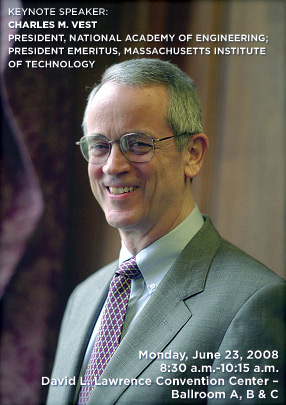
The Main Plenary is traditionally the most highly anticipated session at the ASEE annual conference, with over 2,000 attendees enjoying this important keynote address. This year, ASEE is pleased to have the participation of a visionary leader in engineering and technology education.
Charles M. Vest, long an influential figure in engineering, science, education and public policy, was elected in March 2007 to a six-year term as president of the National Academy of Engineering, part of the National Academies. In addition to leading an organization made up of the nation’s premier engineers, he also serves as vice chairman of the National Research Council, the principal research arm of the National Academies.
Vest was president of the Massachusetts Institute of Technology from 1990 through 2004. During that time, he worked to strengthen federal-university-industry relations and undertook a number of initiatives to bring education and research issues to broader public attention. Vest placed special emphasis on enhancing science and engineering in undergraduate education. While stressing the importance of racial and cultural diversity among faculty and students at MIT, Vest also worked to build a stronger international dimension into the university’s programs.
Beyond academics, Vest has used his strong engineering and science background to contribute to public policy. Following revelations of serious U.S. intelligence lapses in assessing Iraq’s weapons programs, Vest was named to the bipartisan Commission on the Intelligence Capabilities of the United States Regarding Weapons of Mass Destruction, led by Laurence H. Silberman, a senior U.S. appeals court judge, and Charles L. Robb, a former U.S. senator from Virginia. The panel issued its report in 2005.
Earlier, Vest led a U.S. Department of Energy task force on the future of science programs in 2002-2003 and chaired a presidential advisory commission on the redesign of the International Space Station in 1992-1994. Vest was vice chair of the Council on Competitiveness for eight years, is a former chair of the Association of American Universities, and served on the U.S. Secretary of Education’s Commission on the Future of Higher Education.
Vest was elected to the NAE in 1993 “for technical and educational contributions to holographic interferometry and leadership as an educator,” and he currently serves on the NAE Council.
Vest was awarded the 2006 National Medal of Technology for “his visionary leadership in advancing America’s technological workforce and capacity for innovation through revitalizing the national partnership among academia, government, and industry.”
Among Vest’s career honors is the NAE’s Arthur M. Bueche Award, given in 2000 to recognize his efforts to increase government support for research. Vest has served on numerous National Academies studies, most recently the widely cited Rising Above the Gathering Storm, which highlights the roles of science and engineering in U.S. economic growth and competitiveness.
Vest earned a B.S. degree in mechanical engineering from West Virginia University in 1963. He received both his M.S. and Ph.D. degrees from the University of Michigan in 1964 and 1967, respectively, where he later held the positions of dean of engineering, provost, and vice president for academic affairs. He is the recipient of 10 honorary doctoral degrees.
DISTINGUISHED LECTURES
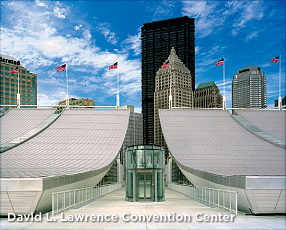
David L. Lawrence Convention Center
- Tuesday, June 24
10:30 a.m. – Noon - Wednesday, June 25
10:30 a.m. – Noon
Tuesday, June 24
10:30 a.m. – Noon
The X-48B
Dr. Robert Liebeck
Project Manager, Blended-Wing-Body Program, Boeing
Dr. Robert Liebeck is currently program manager of the Blended-Wing-Body Program at Boeing. In his 46 years at Boeing, he has served as program manager on numerous classified advanced-concept airplane programs, some of which culminated in successful flight vehicles. He has an extensive list of technical publications, and his airfoil work is discussed in several textbooks on aerodynamics. Liebeck is also professor of the Practice of Aeronautics at the Massachusetts Institute of Technology and adjunct professor of Mechanical and Aerospace Engineering at the University of California Irvine, where he teaches courses in aerodynamics, flight mechanics and airplane design. He received B.S., M.S. and Ph.D. degrees in Aeronautical Engineering from the University of Illinois in Urbana Champaign, and received the university’s College of Engineering Distinguished Alumnus Award in 1996.
Sponsored by: Aerospace Division
The Future(s) of Energetics
 Daniel Bushnell
Chief Scientist, NASA Langley
As chief scientist at NASA Langley Research Center, Dennis M. Bushnell is responsible for Technical Oversight and Advanced Program formulation, with technical emphasis on areas of atmospheric sciences and structures, materials, acoustics, flight electronics/control/software, instruments, aerodynamics, aerothermodynamics, spacecraft, space access and other areas. His technical specialties include flow modeling and control across the speed range, advanced configuration aeronautics, aeronautical facilities and hypersonic airbreathing propulsion. He is a member of the National Academy of Engineering and a fellow of the ASME, AIAA and the Royal Aeronautical Society. He holds numerous awards and distinctions from governmental agencies, professional societies and academia, and has served national and international organizations as a consultant or committee member. He has served as reviewer and editor for 40 journals. During his 44-year career, Bushnell has authored more than 252 publications and major presentations, and delivered nearly 310 invited lectures and seminars, often on the future of technology and the shape it will take for humans and society. He is also considered an expert in areas such as the future of computing, environmental change, climate change, new energy breakthroughs and revolutionary approaches to agriculture, among other issues. He holds a B.S. in Mechanical Engineering from the University of Connecticut and an M.S. in Mechanical Engineering from the University of Virginia.
Sponsored by: Mechanical Engineering Division
Accessible Design: It’s the Law;
Universal Design: It’s the Marke
 Dr. Robert Erlandson
Professor of Electrical and Computer Engineering and Bioengineering, Wayne State University
Dr. Robert Erlandson, Professor of Electrical and Computer Engineering and Bioengineering at Wayne State University, has a B.S. in Electrical Engineering from Wayne State University and a Ph.D. in Biomedical Engineering from Case Western Reserve University. Erlandson worked at Bell Telephone Laboratories, was partner and president of a small consulting firm, and served as vice president for research and technology transfer for a technology transfer and economic development organization operated by Wayne State University and the State of Michigan. He currently directs the Enabling Technologies Laboratory. Erlandson was awarded the 2006 ASEE Fred Merryfield Design Award for exemplary and exceptional design programs. Other citations include the Michigan Campus Compact 2000 Community Service-Learning Award given by Michigan universities to exemplary programs that integrate education, research, and community service. He has received numerous awards for outstanding teaching and educational design activities, including the Wayne State University’s President’s Award for teaching excellence. Dr. Erlandson has authored over 100 technical papers. Most recently CRC Press published his book, Universal and Accessible Design for Products, Services, and Processes, as part of the dissemination efforts of a five-year NSF grant to develop curriculum material on accessible and universal design for undergraduate engineering programs.
Sponsored by: Design in Engineering Education Division (DEED)
The Other Side of Engineering Education: A Historian Examines the Changing Non-Technical Elements

Bruce E. Seely
Professor of History and Chair of the Department of Social Sciences, Michigan Technological University
Bruce E. Seely is professor of history and chair of the Department of Social Sciences at Michigan Technological University. He has written extensively about the history of engineering education and was the 2000 recipient of ASEE’s William Elgin Wickenden Award for his article, “The ‘Other’ Re-engineering of Engineering Education, 1900-1965,” Journal of Engineering Education (July 1999). He also received the Olmsted Award of the ASEE Liberal Studies Division in 2004. He has served as program director for Science and Technology Studies at the National Science Foundation, and as secretary of the Society for the History of Technology. His other research interests have included the history of transportation—especially roads and railroads—and the history of the iron and steel industry. More recently, Seely has been involved in developing Michigan Tech’s undergraduate education program in nanotechnology, focusing on the societal implications of emergent technologies.
Sponsored by: Liberal Education Division
What Would It Take To Expand The Pipeline of Minority Students Coming Into Engineering?
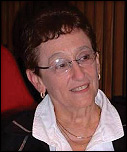
Dr. Lauren Resnick
Director of the Learning Research and Development Center and Professor, Department of Psychology, University of Pittsburgh
Dr. Lauren B. Resnick, professor of Psychology and Cognitive Science at the University of Pittsburgh, is an internationally recognized scholar in the cognitive science of learning and instruction. Her current research focuses on school reform, effort-based education, measuring school system performance, developing strategies for scaling educational reform, assessment for both individual learning and organizational effectiveness, the nature and development of thinking abilities, and the role of talk and discourse in learning. Resnick directs the prestigious Learning Research and Development Center (1977-present) and is founder and director of the Institute for Learning (1995-present).
Sponsored by: Educational Research and Methods Division (ERM)
Wednesday, June 25
10:30 a.m. – Noon
Are Engineering Students Typical Millennials?
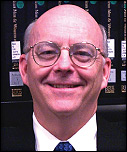
Richard Sweeney
University Librarian, New Jersey Institute of Technology
Richard Sweeney has been university librarian at the New Jersey Institute of Technology for 10 years. Before that, he directed the library at Polytechnic University, in Brooklyn, NY, and directed public libraries in Michigan, New Jersey and Ohio. He speaks frequently about the Millennial generation at conferences for groups such as the American Library Association and the Association of College and Research Libraries. He also consults for libraries on how to accommodate the new generation.
Sponsored by: Engineering Libraries Division.
Creating a Design Revolution: How Engineering for Extreme Affordability Can Change the World
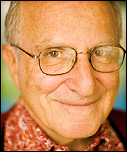
Dr. Paul Polak
Founder, International Development Enterprises (IDE)
After practicing psychiatry for 23 years, Dr. Paul Polak founded International Development Enterprises (IDE), an international nonprofit poverty alleviation organization. Since 1981, IDE has pioneered the development and marketing of affordable income enhancing technologies within developing countries. Its programs have helped more than 17 million participants increase their net annual income by more than $300 million annually. In 2004, The Tech Museum of Innovation named IDE a Laureate for its development of Easy-Drip, an affordable micro-irrigation system. Polak received Ernst & Young’s 2004 Entrepreneur of the Year award in the social responsibility category. In 2003, Polak was named one of Scientific American’s Top 50 Innovators for his work pioneering technology-enabled, market-based poverty alleviation worldwide. Dr. Polak received his M.D. from the University of Western Ontario.
Sponsored by: DEED, International Division, and Civil Engineering Division
Engineering Education in a Flat World

Marty Meehan
Chancellor, University of Massachusetts Lowell
Marty Meehan is the second chancellor of the University of Massachusetts Lowell and the 14th leader of the institution and its predecessor schools, founded in the 1890s. A UMass Lowell alumnus, Meehan graduated cum laude in 1978, having studied education and political science. He received a master’s degree in public administration from Suffolk University in 1981 and a juris doctor from Suffolk University Law School in 1986. A resident of Lowell, Meehan represented the fifth congressional district of Massachusetts in the U.S. House of Representatives from 1993 to 2007. He also served on the House Armed Services and Judiciary committees. Widely respected as a reformer, he established a national reputation for his legislative leadership in reforming campaign finance laws and protecting people against the health risks in tobacco use. Among his priorities were maintaining a balanced federal budget, preserving Medicare and Social Security, supporting and strengthening the military and supporting economic growth that is worker- and environment-friendly.
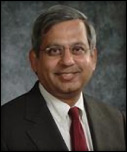
Ashok Saxena
Dean of Engineering, University of Arkansas
Ashok Saxena is currently the dean of Engineering, distinguished professor and the Irma F. and Raymond C. Giffels endowed chair in Engineering at the University of Arkansas. Dr. Saxena’s research area is mechanical behavior of materials, specializing in fracture mechanics and its application to life prediction, reliability and risk assessment of structural components operated at elevated temperatures. He is an author of over 160 papers, two textbooks and seven other reference books. He is a fellow of ASTM and a fellow of ASM International and the winner of numerous awards, including the George Irwin Medal from ASTM (1992) and the Outstanding Research Author Award from the Georgia Institute of Technology in Atlanta (1993). Dr. Saxena previously held the position of Regents’ professor and chair of the School of Materials Science and Engineering at Georgia Tech. Prior to joining Georgia Tech in 1985, he was a fellow scientist at the Westinghouse Research and Development Center in Pittsburgh. Dr. Saxena received his M.S. and Ph.D. degrees from the University of Cincinnati in 1972 and 1974, respectively, in Materials Science and Metallurgical Engineering and his B.S. degree from the Indian Institute of Technology Kanpur in 1970 in Mechanical Engineering.
Sponsored by: Indo-US Collaboration.
Sunday, June 22
Greet the Stars (First Timers Orientation)
4:30 p.m. – 6:00 p.m
This is an orientation for new ASEE members and first-time conference attendees. The session provides an overview of the conference and ASEE as an organization. Take advantage of hearing firsthand from the ASEE leadership. ASEE staff members will also be available to discuss member services. Don’t miss the opportunity to become familiar with your association. Anyone interested in learning more about ASEE and the annual conference is welcome to attend.
Sunday, June 22
2008 ASEE Picnic: A ’Burgh Block Party Presented by Dassault Systemes
Rooftop Terrace – David L. Lawrence Convention Center
6:00 p.m. – 9:00 p.m.
$35 for registered attendees
$45 for non-registered attendees
$18 for children 6-16 years old
See old friends and colleagues and make some new ones at the 2008 ASEE Picnic: A ’Burgh Block Party. Join us as we kick off ASEE 2008 from the rooftop terrace of the David L. Lawrence Convention Center. You’ll enjoy an authentic Pittsburgh experience, including spectacular views of Pittsburgh’s North Shore. Don’t miss it!
Tuesday, June 24
ASEE Meet the Board Forum
4:30 p.m. – 6:00 p.m.
Complimentary for all conference registrants
Back by popular demand. Take advantage of this unique opportunity to discuss important issues facing engineering and technology education stakeholders. Participants will have the chance to share a dialogue with members of the ASEE Board of Directors. Network with Board members and other industry leaders as you discuss key issues, ask questions and share opinions with ASEE’s governing body.
Wednesday, June 25
2008 ASEE Annual Awards Reception
6:30 p.m. – 7:00 p.m.
Complimentary for all conference registrants
All conference attendees are invited to the ASEE Annual Awards Reception preceding the Awards Banquet. This is the perfect opportunity to network with your colleagues and toast the 2008 award winners.
2008 ASEE Annual Awards Banquet
7:00 p.m. – 10:00 p.m.
$75 per person
Dine and celebrate with the recipients of ASEE’s Society Awards and the 2007 Annual Conference Best Paper Award at the 115th ASEE Annual Awards Banquet.
Division and Council Receptions and Banquets
Many of ASEE’s divisions and councils are hosting receptions and banquets throughout the 2008 conference. Be sure to check the ASEE conference Web site at www.asee.org/annual2008.
ASEE Annual Conference Best Paper Award Program
For the 10th consecutive year, ASEE will recognize five outstanding conference papers from each of the Professional Interest Councils and one Best Zone Paper. One of these six papers will also be awarded the overall Conference Best Paper Award.

For most current program please visit: www.asee.org/annual2008
Category: Conference Highlights